REVIEW · KRAKOW
1 Hour Traditional Gondola Sightseeing Vistula River Cruise
Book on Viator →Operated by Aqua Fun Cruises Krakow · Bookable on Viator
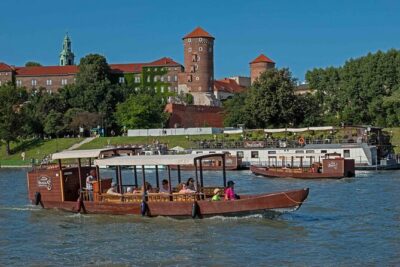
Krakow looks different from the river. This 1-hour Vistula cruise gives you postcard views of Wawel Hill and the bridges that stitch Kazimierz to Podgórze, all from a traditional wooden gondola-style boat. You also get audio commentary tailored for the sights you’re passing, so you’re not just drifting—you’re actually understanding what you’re seeing.
I love how the boat feels intimate and classic: a 12-person wooden gondola built in traditional patterns of spruce or oak, with modern wood preservation to keep it safe. I also love the pace: one hour is long enough to reset your day, but short enough that you won’t feel stuck in tourist time.
One drawback to plan around: there’s no restroom on the boat, so use facilities at the dock before you board (especially if you’re doing this as an afternoon wind-down).
In This Review
- Key Highlights I’d Prioritize
- A 1-Hour Wooden Gondola on the Vistula: Why It Works
- Where You Meet: Barka Mauretania and How to Set Yourself Up
- Audio Commentary: What You’ll Hear and How to Use It
- The Cruise Route, Stop by Stop: What Each Place Adds
- Kazimierz Start and the First Bridge Views
- Church On the Rock: St. Michael and St. Stanislaus
- Grunwaldzki Bridge and the River as a Transit Corridor
- Wawel Hill and the Royal Castle Bend
- Dębnicki Bridge and Postwar Scale
- Zwierzyniec: Green Krakow Between Two Rivers
- Salwator and Kościuszko Mound
- Rudawa River Confluence: Drinking Water Context
- Norbertan Sisters Monastery: A 17th-Century Reconstruction
- Dębniki: Former Village and Craft Traditions
- Manggha Center of Japanese Art: A Wave-Shaped Building
- Podgórze: A Different Krakow Side of the River
- Father Bernatek’s Footbridge: The Bridge of Lovers
- Museum of Tadeusz Kantor (Cricoteka): Art in an Old Power Plant
- Returning Toward Kazimierz
- Timing, Weather, and Comfort: What to Expect in Real Life
- Who This Cruise Is Best For (and Who Might Skip It)
- Should You Book This Vistula Gondola Cruise?
- FAQ
- How long is the Vistula River gondola cruise?
- Where do I meet the boat, and where does it end?
- Is there an audio guide, and what languages are offered?
- What’s included in the price?
- Are coffee or drinks included?
- Is there a restroom on the boat?
- How many people are on the boat?
- Is the booking ticket mobile?
Key Highlights I’d Prioritize
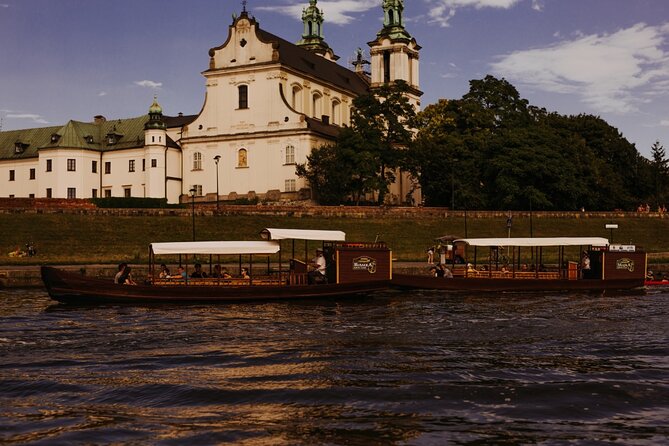
- Traditional wooden gondola feel: 12-person setup, wood-built in a folk-boat style with preservation for safety
- Wawel Hill from the water: see Krakow’s former royal seat from a viewpoint you can’t easily match on foot
- Bridges as landmarks: oldest complete road bridge still standing, plus other major crossings
- Kazimierz to Podgórze river history: you pass neighborhoods with distinct origins and stories
- Calm group size: capped at 24 travelers, and it often feels relaxed on the water
A 1-Hour Wooden Gondola on the Vistula: Why It Works
If you’re doing Krakow for the first time, it’s easy to spend too much energy inside churches, museums, and guided-walk loops. This cruise is the easy counterweight. You sit low, you watch the city slide by, and you get the big sights without the uphill legwork.
The boat itself is part of the charm. This isn’t a big bus on water. It’s a traditional wooden gondola-riverboat designed around historical boatbuilding patterns. The boat is made entirely of wood (spruce or oak), and it uses modern techniques to protect the timber and the connections—so you get that old-world vibe without feeling like you’re on an unsafe craft.
At $17.80 per person for about an hour, it’s also good value. You’re paying for three things at once: a comfortable river seat, structured information via audio, and views of multiple districts from one smooth ride.
Where You Meet: Barka Mauretania and How to Set Yourself Up
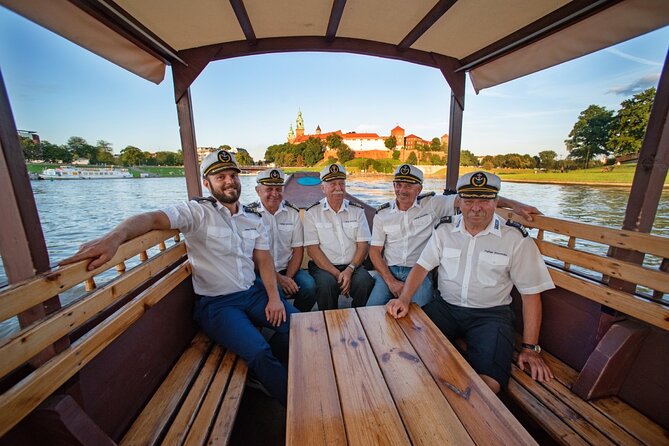
Your boarding starts at Barka Mauretania on the riverside at Bulwar Kurlandzki 137/7. You’ll end right back at the same place. That matters more than it sounds. It makes this feel like a low-friction activity—no complex transit planning, no “where do we meet after” scramble.
Mobile tickets make this simpler than the old-school paper ticket dance. And because it’s near public transportation, you can fit it between other plans without turning it into a logistics project.
Two practical tips from the real-world rhythm of this type of cruise:
- If you want the best viewing angle, aim for the top deck area when boarding. Seats up top tend to be where you can see the most.
- Plan a quick bathroom stop before you go. There’s no restroom on the boat.
Audio Commentary: What You’ll Hear and How to Use It
You get Polish-English audio commentary while you sit back. It’s designed to match the sights you’re passing—bridges, church buildings, districts, and key landmarks—so you aren’t trying to figure out what that spire or tower is on your own.
One nice detail: the commentary doesn’t force you to multitask. You can just watch and listen. I like that because it keeps you relaxed, especially when the river ride turns out to be cooler or breezier than you expected.
If you’re the type who prefers short explanations, you may still want to read the mood in real time: pay attention for the moments the narration calls out major visual anchors (Wawel, bridges, and big cultural buildings). Those are the moments you can actually “see clearly” without stopping your sightseeing momentum.
The Cruise Route, Stop by Stop: What Each Place Adds
This ride is built around river geography: Kazimierz and Podgórze on opposite sides of the Vistula, with Wawel sitting like a crown over the bend. Along the way, you pass religious buildings, major crossings, and cultural sites that explain why Krakow grew where it did.
Kazimierz Start and the First Bridge Views
You begin in Kazimierz, Krakow’s historic district that has long been a meeting point of Jewish and Christian cultures. Even if you do a lot of walking, this start helps you understand the river’s role as a divider and connector at the same time.
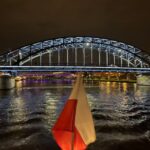
Very early on, you pass the oldest complete road bridge over the Vistula in Krakow that still stands today, connecting Kazimierz and Podgórze via Krakowska Street. This bridge gives you an immediate sense of how long the city has been shaping crossings here—not just modern tourism, but real infrastructure.
Church On the Rock: St. Michael and St. Stanislaus
One of the most distinctive sights along the river is the church commonly known as On the Rock, dedicated to St. Michael and St. Stanislaus. This is one of Krakow’s oldest sacred monuments, and it’s worth knowing that there’s also a Three Millennium Altar in the church’s garden.
From the water, churches can look less like a landmark you hunt for and more like part of the river scene—stone, greenery, and architecture in one frame. It’s a nice contrast to the “front-facing” view you’d get from the street.
Grunwaldzki Bridge and the River as a Transit Corridor
Next comes the Grunwaldzki Bridge, another key link between the Old Town side and Podgórze. It’s also where you notice river transit in the modern sense—there are water tram stops on both banks by the bridge.
That’s useful context for your Krakow day. It reminds you that this river isn’t just a scenic backdrop. It’s a working corridor.
Wawel Hill and the Royal Castle Bend
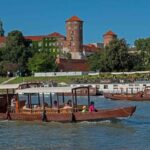
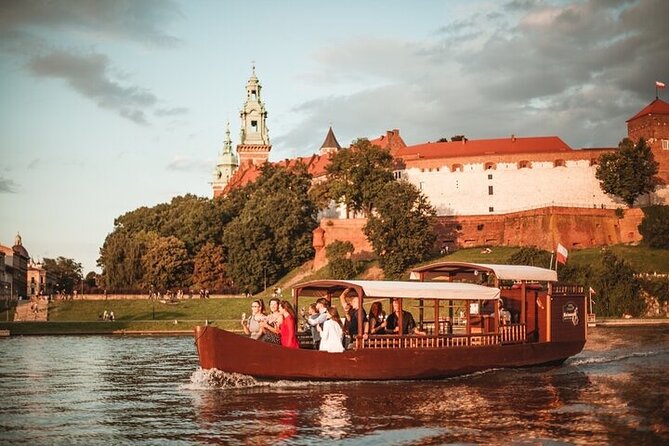
Then you reach the star attraction: Wawel Hill with the Royal Castle. Wawel sits in a bend of the Vistula and is the former seat of Polish kings.
If you only ever see Wawel from land, you miss a key perspective. From the water, the castle and hill sit in a wider city picture. You also see how the river curves around the stronghold, which makes the location feel less like a random “must-see” and more like a deliberate defensive choice.
This is also where most people feel the value of a river cruise most clearly. It’s the rare moment where the boat is doing something walking can’t easily replicate in the same time window.
Dębnicki Bridge and Postwar Scale
You pass the Dębnicki Bridge in its current form, built in 1951. It’s 157 meters long and 19 meters wide, supported on two spans.
From the water, bridges read like engineering portraits. You start noticing span layout, river width, and how the crossing was designed to work. It’s less “pretty postcard” and more “how this city functions.”
Zwierzyniec: Green Krakow Between Two Rivers
The cruise then stretches into the Zwierzyniec district, which sits between the Vistula and the Rudawa rivers and is described as one of Krakow’s greenest areas.
Even without getting off the boat, you can feel the shift. The river banks here feel more park-like, less strictly urban. It’s a good part of the ride if you’re hoping for moments of quiet scenery, not only buildings and stone.
Salwator and Kościuszko Mound
You also pass Salwator, tied to the former Zwierzyniec village. Here, you’ll see the Kościuszko Mound.
This is a fun stop because it acts like a visual waypoint. It’s tall, it’s recognizable, and it gives you orientation. If you like seeing how landmarks connect to the skyline, you’ll appreciate this portion.
Rudawa River Confluence: Drinking Water Context
You reach the Rudawa River, described as the left tributary of the Vistula and one of the drinking water sources for Krakow.
This is one of those facts that changes how you see a river. Instead of thinking only about sightseeing, you remember the Vistula system supports real life—water supply included.
Norbertan Sisters Monastery: A 17th-Century Reconstruction
Next is the Monastery of the Norbertan Sisters, currently shaped by a major reconstruction in the 17th century. The motto of the law is One heart, one soul in God.
From the boat, monasteries can feel like they’re watching the river. It’s also a good reminder that this cruise isn’t only about famous “big names.” It’s about the layers of faith and architecture along the waterline.
Dębniki: Former Village and Craft Traditions
The cruise moves through Dębniki, located where a former village stood. The area was shaped by craftsmen involved in producing tannins for leather and dyes for fabrics.
That detail helps you connect industry to river geography. Rivers provided transport and supported trades. This is the kind of background that makes the scenery feel more grounded.
Manggha Center of Japanese Art: A Wave-Shaped Building
Another major cultural sight is the Manggha Center of Japanese Art. It’s a modern building whose shape resembles a wave of the Vistula. The museum’s concept is described as a house for Japanese art.
This stop gives you a modern contrast after all the older architecture. You see how the river continues to inspire design, and you get a glimpse of Krakow’s cultural openness beyond its medieval core.
Podgórze: A Different Krakow Side of the River
You then head into Podgórze, the right-bank part of Krakow. It dates back to a city of Podgórze founded at the end of the 18th century. Flint deposits here supported early settlement, with development also noted from the 7th century Slavic period.
This stop is valuable because it explains that you’re not viewing the river from only one “Krakow.” The river separates two historically different areas, and the cruise lets you experience that difference without switching trains or walking across town.
Father Bernatek’s Footbridge: The Bridge of Lovers
A highlight for many people is Father Bernatek’s footbridge, a pedestrian and bicycle bridge connecting Kazimierz with Podgórze. It sits on the site of the former Podgórze Bridge, and it’s become a bridge of lovers.
Even if you don’t linger on symbolism, it’s a lively visual anchor. Footbridges often frame the river scene well, and this one has a strong identity.
Museum of Tadeusz Kantor (Cricoteka): Art in an Old Power Plant
You pass the Museum of Tadeusz Kantor, located in the former building of the Podgórze power plant. The center’s role includes promoting the artist’s work in theater and visual arts.
This stop shows you how Krakow reuses industrial shells for culture. From the water, it’s easier to notice the building shape and relationship to the skyline than it is on foot.
Returning Toward Kazimierz
Finally, you come back toward Kazimierz—the district that was independent for centuries and today remains part of the Old Town where cultures intertwine. Then it’s back to your start point.
Timing, Weather, and Comfort: What to Expect in Real Life
This cruise is about an hour, and that length hits the sweet spot for most schedules. You can do it in the middle of sightseeing without feeling like you sacrificed half a day.
Weather matters. The river ride will be cooler than the street, especially if there’s wind off the water. It’s smart to bring a light layer. Also, some departures include blankets, which can make the ride feel more cozy if the air cools down.
The ride itself tends to be smooth. When you’re on a small wooden boat, you still feel the motion, but it’s generally calm enough that people describe it as peaceful and relaxing. If you’re prone to motion sensitivity, I’d still recommend you sit where you can keep your eyes on the horizon.
Finally, there’s an onboard bar and you can also have a drink before you board since the cruise starts near the Mauretania Barque, where drinks are served. That’s a simple way to turn your “one hour” into an enjoyable break.
Who This Cruise Is Best For (and Who Might Skip It)
This is for you if:
- You want big views of Wawel without spending hours walking uphill
- You like a calm reset day with short, clear audio guidance
- You’re visiting Kazimierz and Podgórze and want a quick, scenic link between them
- You appreciate a small group feel (maximum 24), especially if you dislike crowds
You might consider skipping (or setting expectations) if:
- You need nonstop monumental sights the whole time. Some parts of the route feel more urban, with fewer “wow” stops beyond Wawel and a handful of major landmarks.
- You’re expecting a very detailed narration that covers everything you might read in a museum. The audio helps, but it’s still designed for a relaxed ride—not a classroom lecture.
Should You Book This Vistula Gondola Cruise?
Yes, if you want an efficient, low-stress way to see Krakow from the water and you’re especially focused on Wawel. The value is strong for the time you get, and the traditional wooden boat adds character you won’t get on standard sightseeing buses or quick river “photo stops.”
I’d book it if your day needs a break, not another “run from one place to the next” plan. Just do two things before you board: use the restroom at the dock, and dress for river air so you stay comfortable for the full hour. If you take those basics seriously, this becomes one of the easiest wins in a Krakow itinerary.
FAQ
How long is the Vistula River gondola cruise?
It lasts about 1 hour.
Where do I meet the boat, and where does it end?
You meet at Barka Mauretania at Bulwar Kurlandzki 137/7 in Kraków. The tour ends back at the same meeting point.
Is there an audio guide, and what languages are offered?
You’ll have Polish-English audio commentary while you cruise.
What’s included in the price?
The price includes the 1-hour Vistula River cruise and the Polish-English audioguide commentary.
Are coffee or drinks included?
Food and drinks are not included in the price. You may bring coffee or cold drinks, and drinks are served at Mauretania Barque where the cruise starts.
Is there a restroom on the boat?
No—there’s no restroom on the boat. Plan to use facilities at the dock before boarding.
How many people are on the boat?
The experience has a maximum of 24 travelers.
Is the booking ticket mobile?
Yes, you’ll have a mobile ticket. Confirmation is received at the time of booking.