REVIEW · VENICE
Morning Magic: Venice City Walk and Gondola Tour
Book on Viator →Operated by MOVE VENEZIA · Bookable on Viator
Venice moves fast unless you plan. This tour strings together St. Mark’s landmarks, the campi of Castello, and a gondola ride on the Grand Canal for one efficient morning. Two things I really like: the guide-led walk with a personal audio system, and the gondola that takes you past the Grand Canal instead of just letting you stare from a bridge. One thing to consider: the tour is shared, and the pace plus meeting-point logistics can be a little unforgiving if you show up late or get separated.
I also like that you get a good orientation without museum pressure. The walking covers major sights you’ve seen in photos, plus quieter corners like Campo Santa Maria Formosa, and then it lands you back in St. Mark’s-area streets like Mercerie. If you want strictly guided gondola commentary or museum entry tickets, you’ll need to plan that separately.
In This Review
- Key Highlights You’ll Notice Right Away
- Morning Start at St. Mark’s Square: how this tour really works
- Walking the campi of San Marco and Castello with real context
- Campo Santa Maria Formosa: the calmer square break you didn’t expect
- Rialto Bridge and the Grand Canal views you actually want
- Teatro La Fenice and the architecture-story connection
- The gondola ride on the Grand Canal: shared, short, and unforgettable
- Where you end up: St. Mark’s-area streets and Mercerie
- Price and value: what $162.21 covers (and what it doesn’t)
- Logistics that can make or break your morning
- Who should book this, and who should look elsewhere
- Should you book this Venice City Walk and Gondola Tour?
Key Highlights You’ll Notice Right Away
- Audio headsets help you hear the guide without craning your neck in crowds.
- Shared gondola, max 5 per boat, keeps it social but not private.
- Campo Santa Maria Formosa adds a calm, scenic stop away from the most crowded streets.
- Rialto Bridge gives you a classic Grand Canal panorama from the right perspective.
- Grand Canal ride includes the big sights plus minor canals (you feel the Venice water-world).
- Early start (9:00 am) is built for a smooth morning flow before the day heats up.
Morning Start at St. Mark’s Square: how this tour really works
This is a morning mix: first you walk with a guide, then you switch modes for the gondola. The total time is about 2 hours 50 minutes, starting at 9:00 am, and the route is designed for one pass through key areas around St. Mark’s Square and Castello.
You’ll get a personal audio system with headphones, which matters in Venice. Narrow lanes and lively squares can swallow sound fast. Here, the setup helps you follow the story even when your group gets pulled into a tighter space.
One practical thing: this is not a walk where you casually wander and hope. It’s structured, with a meeting at Calle larga de l’Ascension, 1256. When the time comes, you go to the Aliguna Ticket Office, show your WhatsApp voucher, and pick up tickets. Show up late and you risk missing the whole tour.
Walking the campi of San Marco and Castello with real context
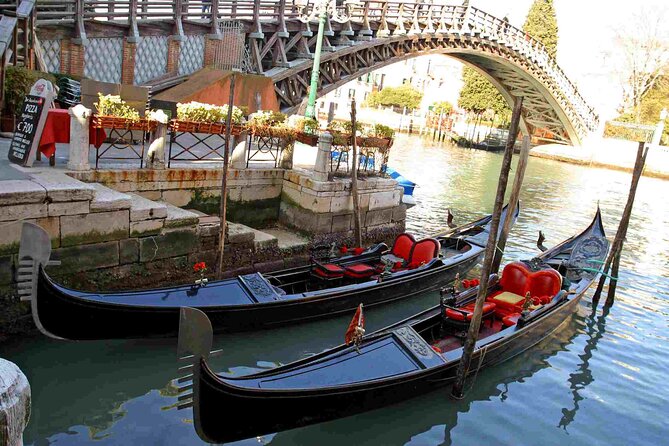
Your walking portion focuses on the area between St. Mark’s Square and the Rialto Bridge, with a strong emphasis on “how Venice works” at street level. You’re guided through narrow alleys, across small bridges, and through squares called campi—the kind of spaces where you learn what locals mean by living with the city’s water-bound geography.
This is also where the tour earns its keep: the guide connects landmarks to everyday Venice. You’re not just ticking boxes. You’re hearing why certain buildings matter, how districts relate, and how the city developed street-by-street.
You’ll also pass by major performance-culture landmarks in the St. Mark’s orbit. The La Fenice opera house is mentioned, and the walk includes the Bovolo Staircase, a Renaissance-style staircase feature that’s easy to miss if you’re walking on autopilot.
If you’re the kind of person who likes details—architecture, small street history, and the little linguistic flavor of the city—this is the part that will make your whole trip feel less chaotic.
Campo Santa Maria Formosa: the calmer square break you didn’t expect
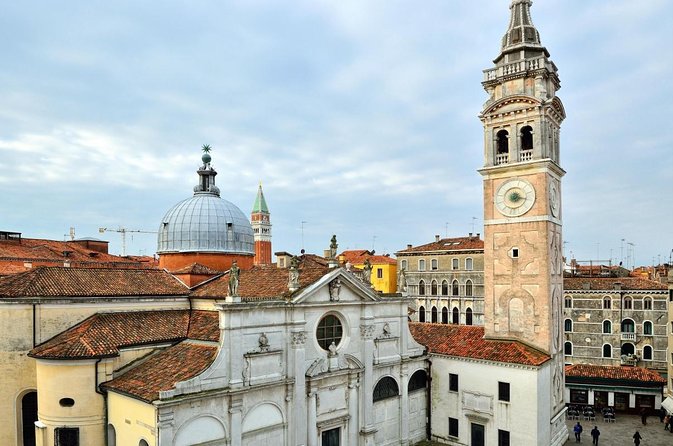
One stop that helps reset the energy is Campo Santa Maria Formosa. Instead of more of the same grand-ticket crowds, you get a more serene square setting, with the Santa Maria Formosa Church as the visual anchor.
The church is described as a mix of Byzantine and Renaissance elements, and it dates back to the 15th century. Even if you never go inside, standing in front of it gives you something useful: a sense of how Venice layers styles over time, not in one neat period but in overlapping waves.
This stop is also a good timing tool. After the busier St. Mark’s lanes, you get a moment where you can slow down, take in the architecture, and re-gather your bearings.
Rialto Bridge and the Grand Canal views you actually want
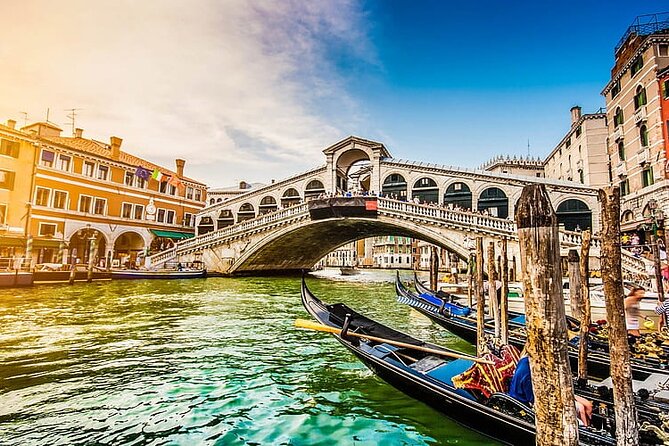
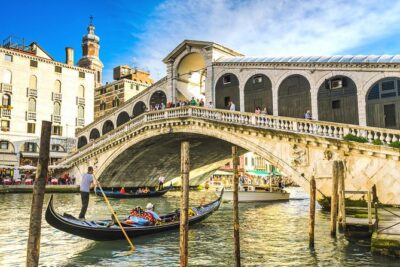
Then the tour pivots back toward the iconic “photos, but with meaning” zone. Ponte di Rialto is one of those sights you’ll recognize instantly: the bridge spans the Grand Canal and connects the San Marco and San Polo areas. It’s dated to the 16th century, and it’s lined with shops along the sides.
The real value here is perspective. From the bridge area, you get the Grand Canal in action—boats and gondolas moving through the same corridor that you’ll ride on next. It’s a smooth setup for what’s coming.
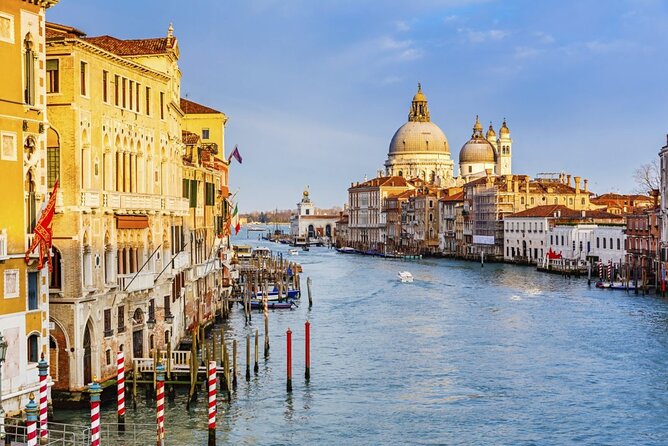
Right after Rialto, you move into the Canal Grande section, where you get the scale of the place. The Grand Canal is described as over 2 miles long and shaped like an S through Venice. That “shape” detail isn’t trivia for trivia’s sake. It helps you understand why your gondola route feels like it curves through the city instead of running in a straight line.
Teatro La Fenice and the architecture-story connection
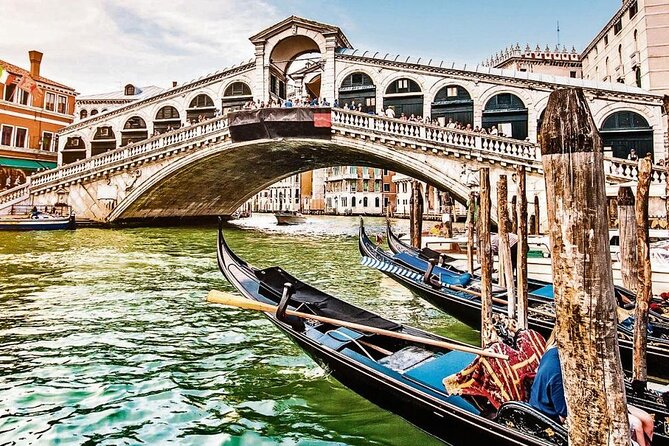
The tour also works in Teatro La Fenice as a theme point, not just a name drop. You get a quick historical storyline about Venice’s theater scene and how La Fenice fits in—especially the years around 1755 and the later 1787 agreement that changed the theater’s management.
Why this matters for you: Venice can feel like a museum of facades. When a guide ties a building to real changes—who ran it, what agreements shifted, how the place evolved—you start noticing patterns while you’re still on the street.
This section is best if you’re already interested in how cities grow through culture and institutions. If you’re only after views and photos, it may feel more “lecture-ish.” But in general, it’s one of the stops that turns sightseeing into understanding.
The gondola ride on the Grand Canal: shared, short, and unforgettable
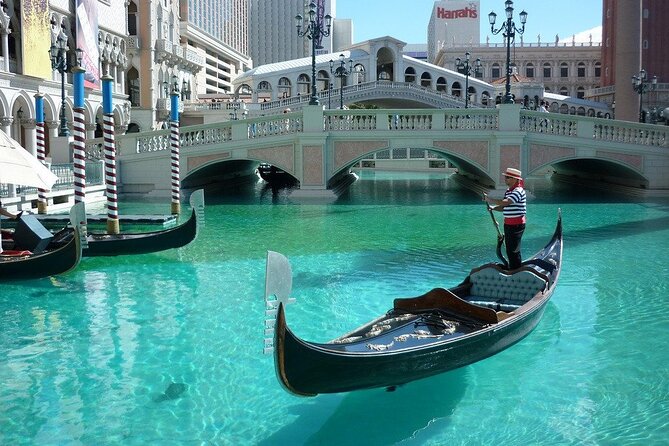
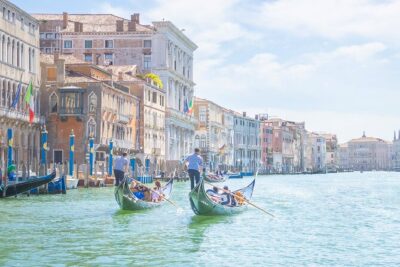
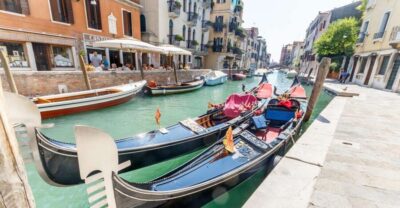
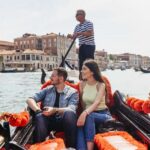
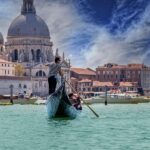
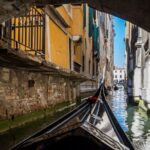
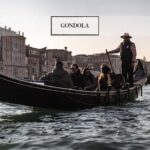
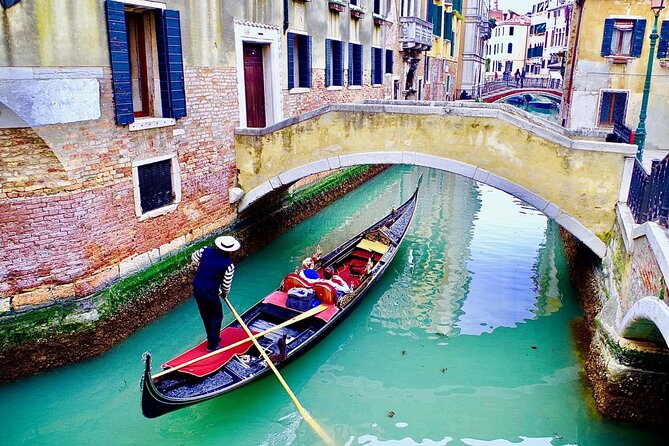
Now for the part everyone books for: the gondola ride departing from Campo San Moisè. You glide along the Grand Canal and also into minor canals. That combination is important. A gondola along the Grand Canal gives you the grand setting, while the smaller canals show you the Venice that feels closer and more personal.
Here’s the key operational point: the gondola is shared, not private. Each gondola can hold up to 5 individuals, and you can’t choose your seat. Your gondolier assigns it.
Also, this is not described as a guided gondola tour. So think of it as a ride plus the prior context from your walking guide. If you’re hoping for constant narration from the gondolier while you float, don’t count on it.
Still, this segment is where the tour becomes emotionally worth the price. Venice looks staged from the street. On the water, it feels real.
Where you end up: St. Mark’s-area streets and Mercerie
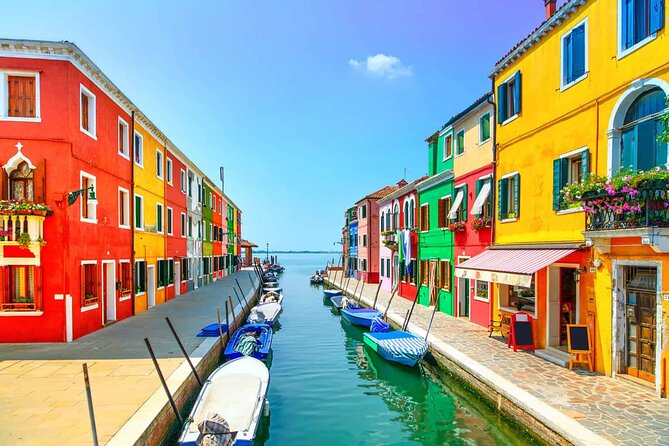
The walking portion concludes back in the St. Mark’s Square area, with the route leading you through Mercerie, the shopping street zone near the center. Since the activity ends back at the meeting point, you finish close to where you started—easy for continuing your day without having to cross the city again.
For a first morning in Venice, this ending style is smart. You get your big sights, you get your canal memory, and then you can choose what to do next: more wandering, a café stop, or a museum visit you pick yourself.
Price and value: what $162.21 covers (and what it doesn’t)
At $162.21 per person, this is not a budget stroll. But it’s also not trying to sell you museum tickets and fancy extras. You’re paying for three things that do add value in Venice:
- A guided walking tour in Piazza San Marco and Castello with headsets.
- A gondola ride along the Grand Canal and minor canals.
- A structured route that’s meant to be efficient in limited time (about 2h 50m).
What’s not included is equally important:
- The walking tour does not include visits to museums or attractions.
- The gondola ride is not a guided tour.
- Food and beverages aren’t included.
- No tips are mentioned as included.
So if you already planned a museum day and you want a guided orientation plus the iconic canal ride, this tends to fit well. If you’re hoping to get a full “all-in” sightseeing package, you’ll probably end up paying more anyway for places that require entry tickets.
Logistics that can make or break your morning
A couple of details matter more than they should in Venice mornings.
First: arrive 20 minutes early. The tour notes that you need to show your voucher at the ticket office and receive tickets before you start. If you miss the meeting point or don’t arrive in time, you may lose the tour and won’t get a refund.
Second: the meeting point is specific: Calle larga de l’Ascension, 1256. It’s near public transportation, which helps, but Venice navigation can still trip you up. One practical piece of advice from a recent comment: if you’re coming from the train area and using navigation, set your plan via Accademia first to avoid getting sent toward a ferry detour.
Third: weather can change things. The itinerary is subject to change in case of inclement weather.
Finally, group size: walking is up to 15 people, and gondolas cap at 5 people. That’s usually a manageable size, but it means you can get separated if the group is moving fast or if your guide doesn’t keep visual contact with everyone.
Who should book this, and who should look elsewhere
This tour fits best if you’re:
- Visiting Venice for the first time and want a guided route that covers St. Mark’s + the Castello side of town.
- Interested in architecture, theater history, and how Venice districts connect.
- Want the Grand Canal gondola experience without planning it as a separate project.
It may be less ideal if you:
- Want museum entry included (it’s not).
- Expect the gondola to be narrated like a full guided boat tour (it’s not described that way).
- Can’t comfortably keep up with a guided pace on narrow streets and bridges.
If your top priority is a slow, private stroll with lots of stops you control, you might do better with something more flexible. But if your goal is to get your bearings fast and ride the canal early in your trip, this does the job.
Should you book this Venice City Walk and Gondola Tour?
I’d book it if you want an efficient first-morning blend: walking with headsets, key St. Mark’s-area sights, and a shared gondola on the Grand Canal that you can experience right away. It’s priced like a premium Venice morning, but you’re paying for guide time plus the core gondola element.
I’d think twice if you know you might struggle with meeting-point timing, or if you strongly prefer private experiences. Also, if you’re expecting museum tickets or a fully guided gondola narrative, you’ll need to adjust your expectations and plan those parts separately.
In short: if you’re ready to move as a group for a few hours, this is a solid way to start Venice with direction and a real canal moment.