REVIEW · VENICE
Venice: St. Mark’s Walking Tour & Gondola Traghetto Crossing
Book on GetYourGuide →Operated by VOIR VENISE · Bookable on GetYourGuide
Venice gives you a shortcut to the stories, not just the sights. This 2-hour loop pairs a quick St. Mark’s orientation with a phone audio route and a real gondola traghetto crossing across the Grand Canal. The “go at your pace” setup is handy when your feet want breaks but your curiosity keeps moving.
I like two things most: the short guided start gives you context fast, and the premium audio guide (9 languages) keeps the walk engaging without feeling like a class. One thing to watch: a small set of recent bookings report poor organization or a missed part of the promised experience, so I’d plan to confirm the traghetto part early and make sure your audio is working before you walk off alone.
In This Review
- Key highlights to look for
- St. Mark’s Square start: a short guide that gives you bearings
- The smartphone audio loop: 36 points, with a rhythm you control
- St. Mark’s Basilica mosaics: why Eastern influence shows up everywhere
- Clock Tower, trade, and the Venetian “time mindset”
- Gambling, Carnival culture, and the city’s risk-taking side
- Procuratie Vecchie & Nuove: institutions and urban evolution
- Napoleonic Wing & Museo Correr: when republic memory gets rewritten
- Caffè Florian, Campanile, and Loggia: elegance and spectacle
- Doge’s Palace, Porta della Carta, and the language of law
- Biblioteca Marciana & Zecca: knowledge and money in the same breath
- Columns of St. Mark and St. Theodore: justice and executions
- Facing the sea: St. Mark’s Basin viewpoint
- Royal Gardens and Hotel Monaco: Napoleon and the early casino idea
- The gondola traghetto crossing: the local shortcut across the Grand Canal
- From St. Mark’s toward Dorsoduro: art, drama, and the city’s softer edge
- Price and value: why $14 can feel amazing or frustrating
- Who should book this St. Mark’s loop (and who might not)
- Should you book the Venice St. Mark’s walking tour with traghetto?
- FAQ
- How long is the St. Mark’s Walking Tour & Gondola Traghetto Crossing?
- Is the tour fully guided?
- Do I have to pay extra for the gondola traghetto crossing?
- Where is the meeting point?
- What languages are available for the audio guide?
- Is the tour good for families and kids?
- Is the tour wheelchair accessible?
Key highlights to look for
- A 15-minute orientation that helps you read St. Mark’s District instead of just passing through it
- 36 audio stops that link power, art, money, and everyday life
- The Grand Canal traghetto crossing done like locals when there’s no bridge
- Dorsoduro-style artistic energy as the route shifts away from the main crowds
- St. Mark’s Square loop routing so you end where you started
St. Mark’s Square start: a short guide that gives you bearings
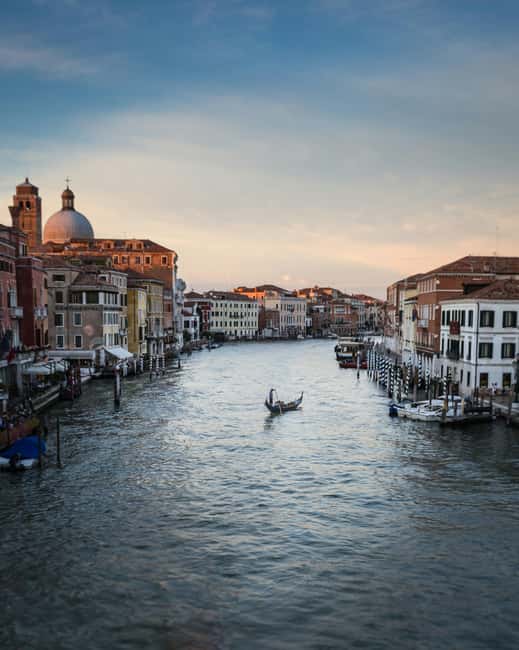
Your tour starts at the partner office near Campo San Zaccaria, and you’ll want to arrive about 5–10 minutes early so you’re not stressed before you begin. From there, you get a welcome and a guided introduction in English that lasts roughly 15 minutes, led by a local host. That is a key part of the value here. Instead of jumping straight into monuments, you get the “what you’re seeing and why it mattered” frame.
This opening is your map for the rest of the walk. St. Mark’s Square isn’t just pretty stone. It’s the political and symbolic heart of Venice, and that comes through in the early talk. You also learn how the city’s identity is tied to trade, church power, and governance. When you understand that, the landmarks stop feeling like random stops and start feeling like a story you can follow with your own eyes.
The smartphone audio loop: 36 points, with a rhythm you control
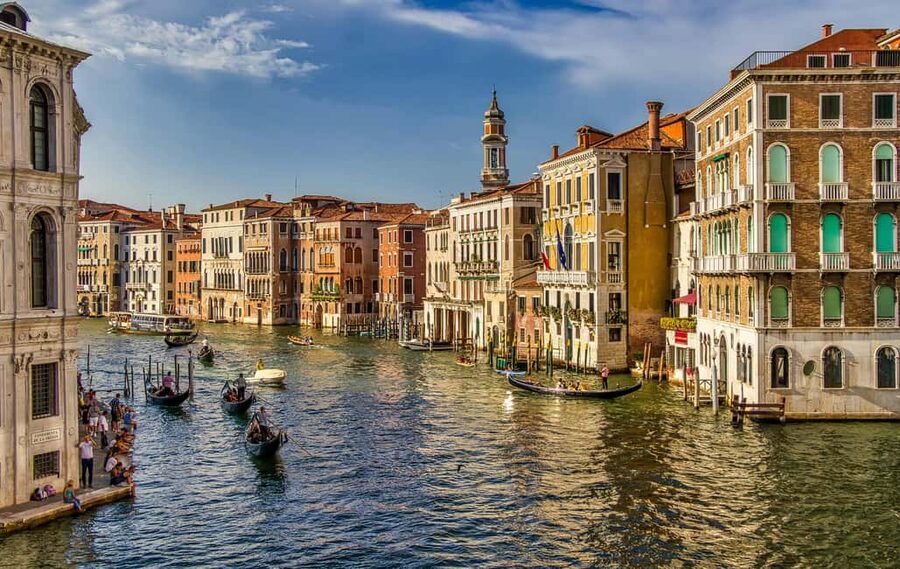
After that first guided chunk, the experience becomes self-paced. You walk a designed route and use a premium smartphone audio guide to reach 36 key points of interest. The audio is available in 9 languages, and it’s officially validated by Retrace, an art and art-history specialist in Europe. Practically, that means the commentary is meant to be solid and history-aware, not just generic.
Because it’s audio, you can pause, step aside, and take photos without feeling like you’re holding up a group. You’ll also get a range of topics, from official power to daily Venetian life. That mix matters in Venice, where the eye can get stuck on gold mosaics and forget to notice who paid for them and what the symbols meant.
Here’s how the walk tends to unfold, and what each cluster of stops is really doing for you:
St. Mark’s Basilica mosaics: why Eastern influence shows up everywhere
You’re likely to hit St. Mark’s Basilica early. Even if you’ve seen it in photos, the mosaics land differently in person. The audio focus on Eastern influences and sacred power helps you connect the look of the basilica to the role it played in Venice’s identity. It’s not just religious. It’s also political messaging in glitter.
One drawback to keep in mind: Venice’s most famous interiors can be intense with crowds and lines. The audio tour format helps you move smartly, but your actual ability to linger depends on on-the-ground foot traffic.
Clock Tower, trade, and the Venetian “time mindset”
Next you’ll hear how the Clock Tower is tied to time and trade, not just a dramatic backdrop. Venice ran like a system. When you understand that, the city feels less chaotic. It feels engineered.
Gambling, Carnival culture, and the city’s risk-taking side
A memorable stop is Ridotto at Caffè Lavena, where the audio connects the area to gambling and Carnival society. This is the Venice you don’t always see in the standard postcard script. It adds contrast: power and pageantry sit beside money and chance.
Procuratie Vecchie & Nuove: institutions and urban evolution
The Procuratie Vecchie & Nuove are about more than architecture. The audio helps you see these buildings as institutional anchors that shaped how the district functioned over time. Venice didn’t just look historic. It acted historic, with civic roles built into the streetscape.
Napoleonic Wing & Museo Correr: when republic memory gets rewritten
Then comes the Napoleonic Wing & Museo Correr, which frames the fall of the Republic and how civic memory survived the change of power. That matters because Venice’s “current Venice” is layered. You’re not walking through one era. You’re walking through a stack of political chapters.
Caffè Florian, Campanile, and Loggia: elegance and spectacle
At Caffè Florian, the audio leans into elegance and artists—Venice’s knack for turning social life into culture. Nearby, the Campanile & Loggia act like symbols: they’re the city’s stage props, visible from far and used to signal status.
Doge’s Palace, Porta della Carta, and the language of law
You’ll then move into the justice-and-power zone: Doge’s Palace with its red columns, plus Porta della Carta and the Tetrarchs. These stops are where Venice becomes very specific. You can practically feel the machinery of governance: law, authority, and punishment built into stone.
The audio also connects to the darker side of legend at spots like the Prisons & Bridge of Sighs. Even if you’ve heard the famous lines before, the tour’s pacing lets you take it in as a scene, not a cliché.
Biblioteca Marciana & Zecca: knowledge and money in the same breath
The Biblioteca Marciana & Zecca pairing is a great idea for an audio route. Knowledge and money are linked in Venice. When your mind catches that connection, you start noticing how often the city treats learning and finance as neighbors.
Columns of St. Mark and St. Theodore: justice and executions
The audio may guide you to the Columns of St. Mark & St. Theodore, where the story points to justice and executions. Again, the point isn’t shock value. It’s how Venice used public art and public placement to enforce order.
Facing the sea: St. Mark’s Basin viewpoint
A viewpoint of St. Mark’s Basin helps you reset your perspective. Venice is built to look toward the water, not away from it. Even if you only get a few minutes here, you’ll feel why the sea shaped the city’s attitude.
Royal Gardens and Hotel Monaco: Napoleon and the early casino idea
You’ll likely pass the Royal Gardens (with Napoleon’s political symbolism) and Hotel Monaco & Ridotto of San Moisè, tied to the idea of Europe’s first public casino. These stops add personality: rulers, reforms, and entertainment all share the same streets.
If you like your history with a side of intrigue, this part tends to work well.
The gondola traghetto crossing: the local shortcut across the Grand Canal
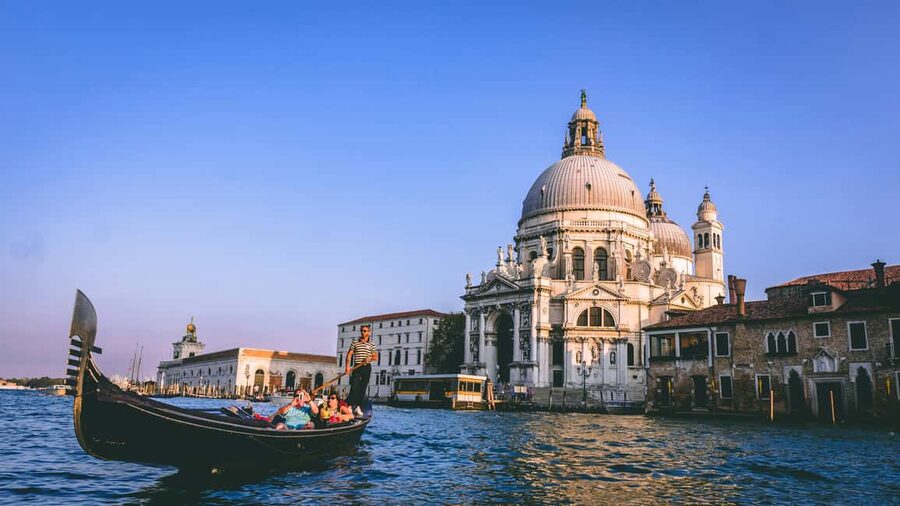
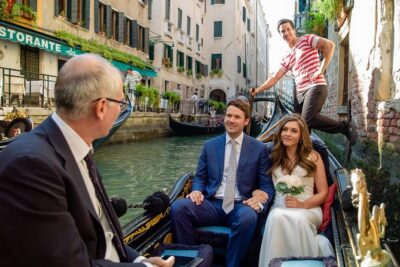
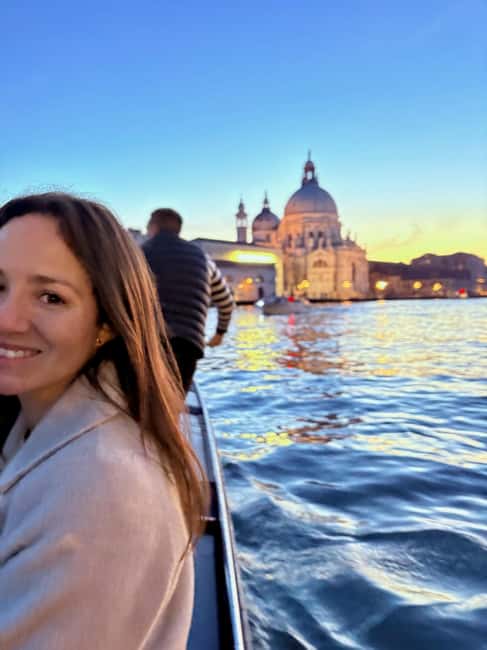
Midway through the walk, you’ll experience the Grand Canal gondola traghetto crossing. This is the reason many people book, because it’s a tradition used by Venetians for centuries when there isn’t a bridge.
Here’s the practical bit that affects your day: the traghetto fee is €2 per person, and you pay it directly to the gondolier on site. You can’t prepay or include it in advance. That means you should have a bit of cash ready, and you should expect it to happen during traghetto operating hours, usually 10:00 AM to 5:00 PM.
Also, keep your expectations clear. This is not a private gondola ride for romance and photos in slow motion. It’s a real crossing. That’s exactly why it feels local.
A small tip: if your phone audio is paused or your headphones die, you’ll still have this moment. It’s the one “transport” element in the experience, so it’s worth treating it like a mini-reset. Put your phone away, get your bearings, and look at how the canal looks from that water-level perspective.
And because of the mixed feedback on organization, I’d do one simple thing: at the start, ask where the crossing fits in the loop and make sure you understand that it’s part of the route you’re taking.
From St. Mark’s toward Dorsoduro: art, drama, and the city’s softer edge
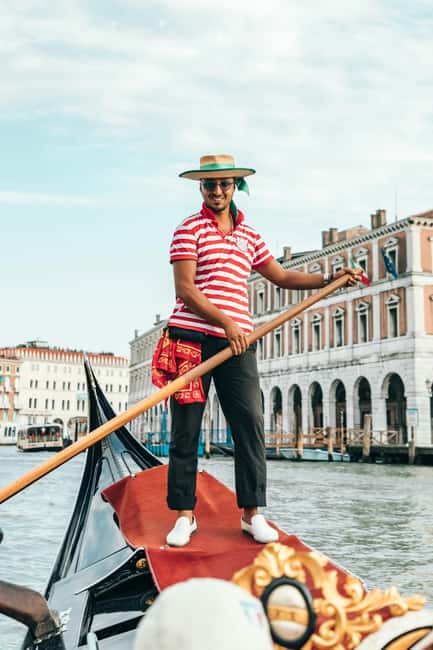
After the canal crossing, the route continues into Dorsoduro, a district known for a lighter, artistic spirit and a more refined atmosphere. You’ll feel the shift as the walk moves away from the heaviest St. Mark’s crowd energy.
The audio points you toward major art and cultural stops that help you understand why Dorsoduro is different. You’re not just seeing institutions. You’re tracing taste—how Venice decides what it values and where it gathers people to talk about it.
Stops you may hit include:
- Peggy Guggenheim Collection for modern art and a specific kind of vision
- Palazzo Cini & Gallerie dell’Accademia for Venetian painting
- Accademia Bridge, which the audio links to the origins of the Grand Canal
- Teatro La Fenice, framed around destruction and rebirth
- Calle Larga XXII Marzo, tied to luxury and the 1848 revolution
- Campo & Church of San Moisè, with a baroque theatre feel and symbolic power
This section works well if you like Venice as a living culture, not just a museum city. The route doesn’t freeze time. It shows how politics, art, and ambition change the city’s look decade after decade.
One thing to remember: because you’re walking in Venice, uneven surfaces and bridges can slow you down even if your “tour time” is only about 2 hours. It’s designed as an elegant loop, but your pace still matters.
Price and value: why $14 can feel amazing or frustrating
At around $14 per person for a ~2-hour walking experience, plus an included smartphone audio guide and a small gondola-themed souvenir, the price looks like a strong deal. The best-case scenario is clear: you get a quick guided orientation, an audio-supported route with 36 points, and the traghetto crossing that adds a real Venice tradition to the mix.
The caveat is also clear. A few recent experiences report that organization fell apart or that promised elements were missing. That’s not something you can ignore when the gap between a great day and a disappointing one can be as simple as staff not directing you well at the right moment.
So how do you protect yourself? Keep it practical:
- Start early enough to get through check-in without rushing.
- Bring comfortable walking shoes, headphones, and a charged smartphone.
- Before you leave the start point, confirm that the gondola traghetto crossing is included in your loop and understand the timing.
If you do those things, the odds are better that you’ll experience the tour the way it’s meant to be: guided context up front, self-paced listening in the middle, and that Grand Canal crossing as your payoff.
Who should book this St. Mark’s loop (and who might not)
This tour fits families and kids well because the structure lets you pause whenever you want, and the highlights are varied enough to keep attention from wandering too far. It also suits adults who prefer a “walk and listen” style over constant group herding.
I’d especially recommend it if you:
- Want to see a lot of iconic spots in a short time (about 2 hours)
- Like audio guides that give context while you move
- Want a local-style canal crossing without paying for a full private gondola
I’d think twice if you:
- Need lots of hands-on management from staff throughout
- Hate tech setup moments (headphones, phone battery, audio playback)
- Are traveling with mobility needs that make bridges and uneven walkways hard
Should you book the Venice St. Mark’s walking tour with traghetto?
I’d book this if you want a smart St. Mark’s District walk with context baked in, and you’re excited about doing a traghetto crossing the way locals do it. For the price, the combination of a short guided start, premium multi-language audio, and a paid-on-site gondola moment can be a great value.
But I’d also go into it with eyes open. Because there are reports of missing or incomplete parts for a few bookings, the safest approach is to check in early, confirm the crossing plan at the start, and make sure your audio is ready before you begin the self-paced loop.
If you want an efficient Venice day that doesn’t trap you in a rigid schedule, this one is worth considering.
FAQ
How long is the St. Mark’s Walking Tour & Gondola Traghetto Crossing?
The walking loop is approximately 2 hours.
Is the tour fully guided?
No. You get a guided introduction of about 15 minutes in English, then you continue at your own pace using a smartphone audio guide.
Do I have to pay extra for the gondola traghetto crossing?
Yes. The €2 per person fee is paid directly to the gondolier on site and can’t be prepaid or included in advance.
Where is the meeting point?
Meet at the partner office inside Campo San Zaccaria 4683g, arriving 5–10 minutes before your tour begins.
What languages are available for the audio guide?
The audio guide is available in English, French, Italian, Spanish, German, Portuguese, Russian, Chinese, and Japanese.
Is the tour good for families and kids?
Yes. It’s described as suitable for families and children, and you can enjoy it at a flexible pace while walking.
Is the tour wheelchair accessible?
It is not recommended for wheelchairs due to uneven surfaces and bridges.