REVIEW · VENICE
Venice Walking Tour and Gondola Ride
Book on Viator →Operated by ROMAETRAVEL · Bookable on Viator
Venice in three hours beats the guesswork. This classic walk-and-gondola combo takes you right through headline Venice, including Piazza San Marco and the Grand Canal, with a guide who connects the big sights to the city’s Renaissance-era legends and street-level details.
I especially like the small group feel and the chance to get real guidance instead of just following a crowd. One thing to keep in mind: the streets can be fast and crowded, so you may sometimes feel like you are moving more than you want, and a couple of reports mention a brisk pace or difficulty hearing while you’re still walking.
In This Review
- Key Highlights You Should Care About
- The 3-Hour Venice Formula: What You’re Getting
- Meeting at Stazione di Venezia Santa Lucia and How the Route Starts
- Grand Canal Orientation: Seeing Venice’s Main Water Street
- Piazza San Marco: The Square That Runs Venetian Life
- Torre dell’Orologio and the Geometry of the Piazza
- Ponte dei Sospiri: A Covered Bridge With a Purpose
- Ponte di Rialto: The Oldest Grand Canal Crossing
- Doge’s Palace: Venetian Gothic and the Power Seat
- Teatro La Fenice: Opera Fame Without the Ticket Upgrade
- Gondola Ride Reality: Why This Part Feels Like the Payoff
- Value and Pace: Is $185.38 Worth It?
- Who This Tour Works Best For
- Should You Book This Venice Walking Tour and Gondola Ride?
- FAQ
- How long is the Venice Walking Tour and Gondola Ride?
- What is the price per person?
- What’s included in the tour?
- Is the gondola ride guaranteed?
- What is not included?
- Where is the meeting point?
- Where does the tour end?
- Do I get a ticket on my phone?
- Is there an access fee for Venice on some dates?
- What is the cancellation policy?
Key Highlights You Should Care About
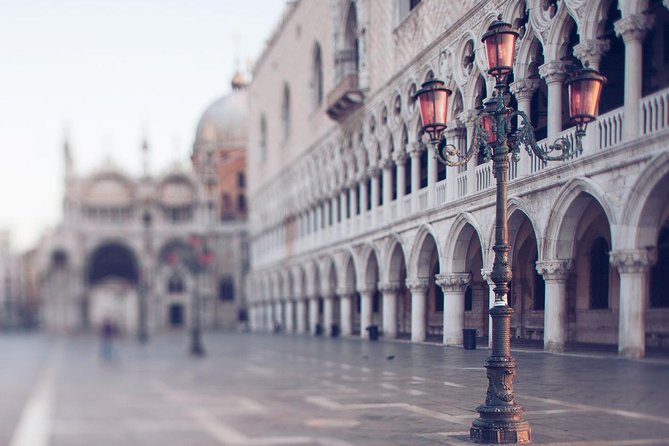
- Small group (max 8) keeps the walk more manageable than giant coach tours.
- Guides Julian and Elisabeth get consistent praise for staying organized and helping people stay on track.
- Grand Canal orientation: you learn why it divides Venice and how it shapes the city’s layout.
- Bridge storytelling that actually sticks at Ponte dei Sospiri and Rialto.
- Traditional gondola ride included, so you do not have to sort that timing on your own.
- Mobile ticket for smoother check-in on the day.
The 3-Hour Venice Formula: What You’re Getting
This tour is built for first-timers who want the “wow” moments quickly. You’ll spend about 3 hours on foot, then get the relaxing punctuation mark of a traditional gondola ride. The best part is that it is not just a checklist. A good guide helps you understand what you’re seeing: how Venice works as a city made of canals, bridges, and public squares.
The other practical win is the group size. With a maximum of 8 people, it is easier to hear explanations and keep the pace from turning into a full-contact sport. Still, Venice sidewalks and narrow lanes have their own rules. Even with a small group, you’ll be in crowds near the core sights, so expect some moments where conversation takes effort.
Price-wise, $185.38 per person is not “cheap,” but you are paying for two things at once: guided walking time plus a gondola ride. If you were to price those separately, the all-in structure starts to feel more fair. You’re also booking this in advance on average (97 days), which usually helps when you want reliable timing.
Meeting at Stazione di Venezia Santa Lucia and How the Route Starts
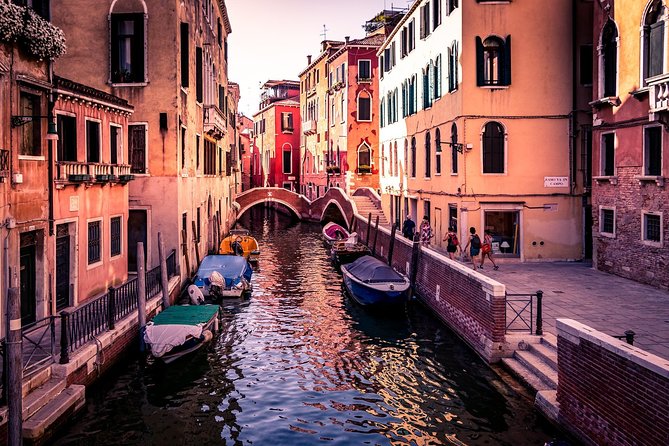
You begin at Stazione di Venezia Santa Lucia (30121 Venice). That’s a smart choice for visitors because it’s a main hub, and the tour is listed as near public transportation. You also end back at the same meeting point, which makes the finish simple when you’re trying to reconnect with your hotel plans.
From there, the tour’s logic is clear: it starts with the Grand Canal area, then moves into Piazza San Marco and the bridge-and-palace zone. That matters because Venice is confusing when you first arrive. Learning the city’s “spine” early makes everything feel less like wandering.
One more real-life detail: a few guided-experience reports stress the importance of confirming exactly where to meet. If your confirmation message includes a nearby landmark or meeting point reference, use it. Venice stations and public spaces can be big, and it only takes a few minutes to miss the start.
Grand Canal Orientation: Seeing Venice’s Main Water Street
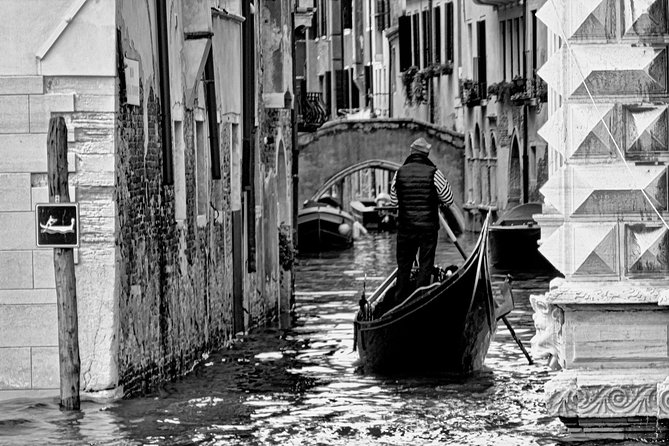
The tour’s first big lesson is the Grand Canal (Canal Grande). This is the “street” of Venice you can follow by boat, and it splits the center into two halves. You’ll also hear why the canal matters historically: it’s older than Venice itself, and the city grew along the river path.
If you like specifics, here are the kind of details your guide can point out:
- The Grand Canal runs about 3.8 km (2.4 mi).
- It’s roughly 30 to 90 m wide.
- Average depth is around 5 m.
None of this turns into trivia for its own sake. It helps you predict what you’ll see next: where boats move, why certain angles look the way they do, and why the city funnels people toward specific bridges and squares.
If you’re arriving thinking you’ll only see Venice from the gondola later, this stop changes that. You start to notice the canal’s bends and the way buildings face the water. It makes your later photos better, and your later walking feel less random.
Piazza San Marco: The Square That Runs Venetian Life
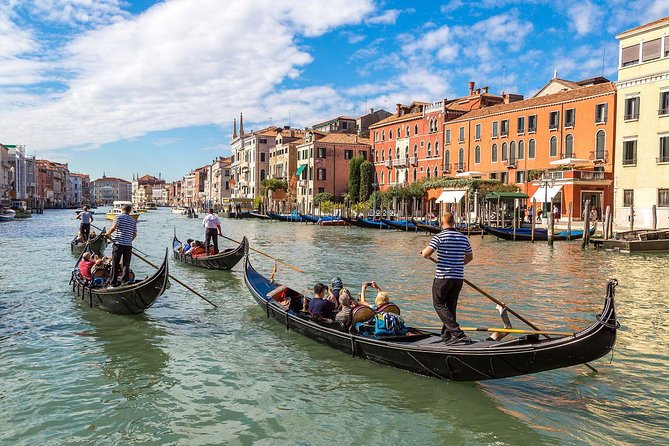
Next comes Piazza San Marco, which is Venice’s principal public square—people often just call it la Piazza. Your guide should help you read the square like a stage. This is where the city’s social, religious, and political life has gathered for centuries.
You’ll likely learn a useful language point too: in Venice, most other public spaces are called campi (fields). The square has special status, and knowing that helps you follow directions when you’re outside the tour.
A key stop here is the Campanile di San Marco area. The building complex you’ll hear about includes San Marco Basilica, with a structure dating to the late 11th century. Expect commentary about how the façade and roofline were built up over time, with a main façade that is mostly Gothic.
A practical note: admission is not included for the Campanile-related stop. That doesn’t mean you’re stuck outside. It means you’re viewing and learning, while entry to climb or go inside would be extra if you choose it.
Torre dell’Orologio and the Geometry of the Piazza
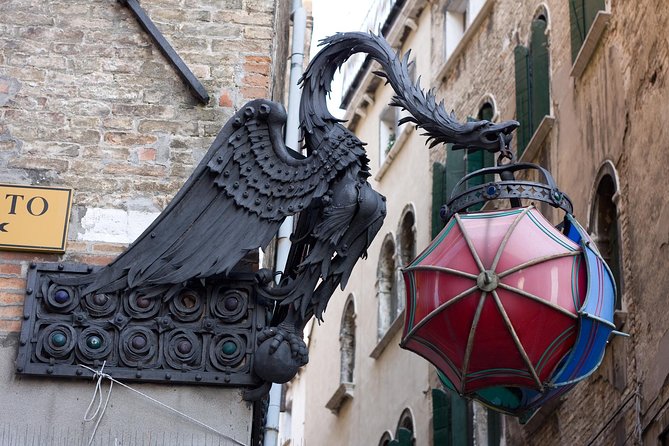
Right after the basilica zone, you’ll spend time around Torre dell’Orologio (the Clock Tower). This is an early Renaissance building on the north side of Piazza San Marco, near the entrance to the Merceria.
The tour’s value here is how you learn to “see” the space as a whole. The clock tower isn’t just a pretty vertical line. It connects to the lower buildings around it and sits near Procuratie Vecchie. You’ll probably get pointed toward how the Merceria leads you through the area.
This is one of those moments where you can slow down mentally. Venice looks complicated, but when you understand one side of the Piazza and what it connects to, the rest becomes easier to navigate on your own later.
Ponte dei Sospiri: A Covered Bridge With a Purpose
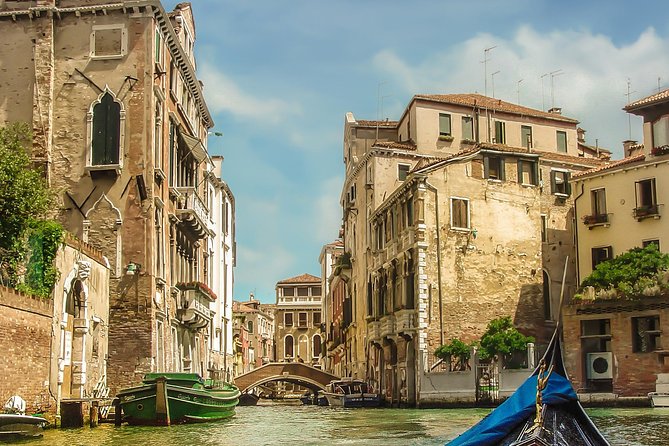
Then you shift from open square to a bridge stop with an edge: Ponte dei Sospiri (Bridge of Sighs). The tour explanation for this one is especially strong because it ties design to function.
Built in 1602 using white Istrian stone, the bridge connects Palazzo Ducale to the new prisons, the Prigioni Nuove. What makes it memorable is that it is entirely covered—two wall-separated corridors link it on either side.
If you’ve only seen photos, it’s worth paying attention here. The story gives the bridge shape meaning. You start to understand why Venetian architecture often feels theatrical: even in a passage that’s meant to control movement, the city still cared about the way it looked and how it moved people through a system.
Ponte di Rialto: The Oldest Grand Canal Crossing
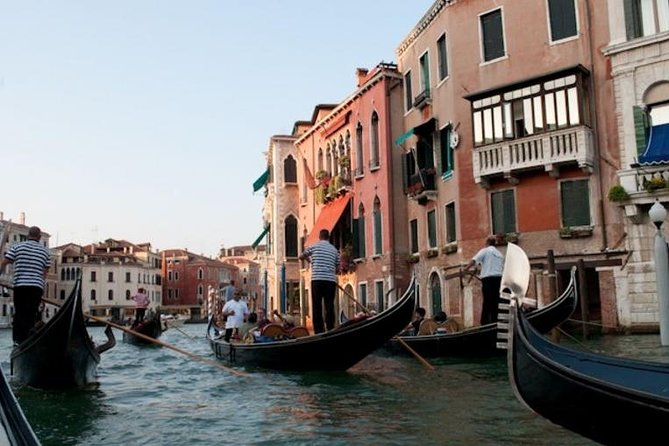
After that, you’ll walk into the Ponte di Rialto area. Venice has around 354 bridges, but Rialto is the standout for most visitors.
This bridge is described as the oldest of the four bridges spanning the Grand Canal. It connects the districts (sestieri) of San Marco and San Polo. The history here is a mini-lesson in how Venice solved problems with what it had at the time:
- It was rebuilt multiple times.
- It was first built using two old ships.
- Then it became a wooden structure.
- The version you can see today dates from a 1591 reconstruction.
That detail helps you read Rialto as more than a photo spot. It’s evidence of how the city kept rebuilding itself as needs changed.
Doge’s Palace: Venetian Gothic and the Power Seat
A major anchor of the walk is Doge’s Palace. This is Venetian Gothic at full volume, and it’s one of Venice’s top landmarks for a reason. You’re not just seeing a pretty building. You’re stepping into the symbol of the former Venetian Republic.
The palace was the residence of the Doge, the supreme authority of the republic, and it now operates as a museum (opening as a museum in 1923). It’s also part of the set of museums run by the Fondazione Musei Civici di Venezia.
A key practical point: admission is not included for the Doge’s Palace stop. That means the tour portion gives you context and orientation, but you’ll need to pay separately if you want to go in and spend longer inside.
If you love architecture, this is a high-return stop. Even without entry, the palace structure and the overall setting teach you what Venice used power to look like.
Teatro La Fenice: Opera Fame Without the Ticket Upgrade
You’ll also get a stop at Teatro La Fenice, an opera house with serious historical reputation. It’s described as one of the most famous landmarks in Italian theatre history, with major premieres in the 19th century.
Your guide can tie this to the names that matter to opera lovers: Rossini, Bellini, Donizetti, and Verdi. If opera is on your list, this stop makes the city feel bigger than canals and cathedrals. It reminds you that Venice also shaped performance culture.
Like some of the other landmark stops, admission isn’t included here, so you’re mainly getting the exterior and the story. Still, it is a satisfying “you’re here” moment.
Gondola Ride Reality: Why This Part Feels Like the Payoff
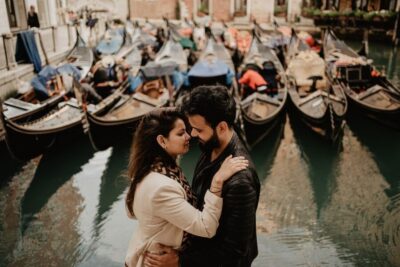
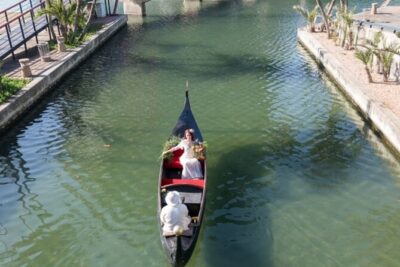
Then comes the traditional gondola ride, which is the centerpiece for most people. The whole tour is framed as a classic Venice introduction plus a relaxing break after walking.
In the best-run versions of this experience, your guide keeps everyone together, then helps you get settled for the ride and returns you to the route after. Names like Julian and Elisabeth come up in praised experiences for exactly this kind of organization—getting people to the gondola and then back to finish the tour.
One consideration: gondola experiences can vary depending on the boat and conditions. In at least one account, a gondola singing-style expectation did not match what the group received, and a microphone issue affected clarity. Another report mentioned the gondola ride was not available. Those are not guaranteed outcomes, but they’re reminders that Venice is a working city, and plans can shift.
So my advice is simple: treat the gondola as the highlight, but don’t build your entire day around a perfect script. If you stay flexible, even a slightly imperfect ride can still be beautiful because you’re on the Grand Canal’s main visual stage.
Value and Pace: Is $185.38 Worth It?
At $185.38 per person for about 3 hours, you’re paying for:
- a guided walk through the densest sightseeing area
- plus the cost and logistics of a traditional gondola ride
- plus a small group experience
That’s the value angle. You are not just renting time in Venice. You’re buying someone’s ability to connect the sights, keep the route coherent, and get you to the right places without you spending your energy on navigation.
The only fairness issue is pace. Some reports call the walk too fast, with limited chances to stop and take in details or ask questions while moving through crowds. If you hate rushing, you’ll want to go in with the right mindset: this is a high-sight, forward-moving tour. You can still get value from it, but you may need to ask questions sooner rather than later.
Who This Tour Works Best For
This is a great fit if:
- you’re in Venice for a short time and want the classic anchors: Piazza San Marco, bridges, and Doge’s Palace
- you prefer a guide to make sense of the city instead of building a route from scratch
- you want gondola time without planning it separately
It may be less ideal if:
- you’re sensitive to fast walking through crowds
- you expect lots of slow, sit-down explanations at each landmark
- you want full museum entries as part of the tour price (since multiple sites have admission not included)
Should You Book This Venice Walking Tour and Gondola Ride?
Yes, if you want a first-timer-friendly route that mixes Venice’s most famous square and bridges with a real gondola moment, all in one coherent package. The strongest reason to book is the pairing: guided walking that makes the city make sense, plus a gondola ride you do not have to figure out.
Just go in knowing it’s a moving tour. Wear comfortable shoes, expect crowds around the core sights, and make sure you review your meeting details so you’re not searching the station at the worst possible moment.
If that sounds like your style, you’ll likely come away feeling you found the structure of Venice fast, not just photographed it.
FAQ
How long is the Venice Walking Tour and Gondola Ride?
The tour lasts about 3 hours.
What is the price per person?
The price is $185.38 per person.
What’s included in the tour?
It includes a guided tour and a traditional gondola ride, plus a small group limited to a maximum of 8 travelers.
Is the gondola ride guaranteed?
The gondola ride is listed as included in the experience.
What is not included?
Food and drinks, personal purchases, and tips are not included. Some attractions on the route have admission not included.
Where is the meeting point?
The start is at Stazione di Venezia Santa Lucia, 30121 Venice, Metropolitan City of Venice, Italy.
Where does the tour end?
The activity ends back at the meeting point.
Do I get a ticket on my phone?
Yes, the tour uses a mobile ticket.
Is there an access fee for Venice on some dates?
On certain dates, visitors staying outside Venice who are visiting for the day may be required to pay a €5 access fee. Details and exemptions are available at https://cda.ve.it.
What is the cancellation policy?
You can cancel for a full refund if you cancel up to 24 hours in advance.