REVIEW · VENICE
Venice: St. Mark’s Basilica Guided Tour & Gondola Ride
Book on GetYourGuide →Operated by Walks of Italy · Bookable on GetYourGuide
Venice moves at canal speed. This tour stitches together Rialto Bridge secrets with a skip-the-line Basilica visit, so you spend less time herding through crowds and more time learning why Venice looks the way it does. I especially like how the guide keeps the stories practical, from food and markets to the details inside St. Mark’s gold mosaics.
The only big watch-out: St. Mark’s access can be affected on some dates, and you still need a valid photo ID for entry. If you’re the type who hates schedule surprises, build in some flexibility.
In This Review
- Key Highlights You’ll Actually Notice
- Start at Rialto: Easy Meeting, Fast Orientation on Foot
- Rialto Bridge, Fish Market, and Food Clues You Can Use
- Castello Streets, Palazzo Grimani Sight Glimpse, and Verrocchio’s Statue
- Libreria Acqua Alta: A Fun Break That Still Fits the Venice Story
- St. Mark’s Basilica: Gold Mosaics, Relics, and Skip-the-Line Entry
- Gondola Ride from Bacino Orseolo: Calm Canals, Small Boats
- Price and Value: Why $79 Can Make Sense in One Day
- Service and the Human Factor: When It’s Perfect and When It Falls Flat
- Who This Tour Suits Best (and Who Should Skip It)
- Final Call: Should You Book St. Mark’s Basilica + Gondola?
- FAQ
- How long is the tour?
- Where do we meet?
- Does the tour include St. Mark’s Basilica entry without waiting?
- Do we ride the gondola with the tour guide?
- Is a photo ID required?
- What if there are high tides or heavy rain?
Key Highlights You’ll Actually Notice
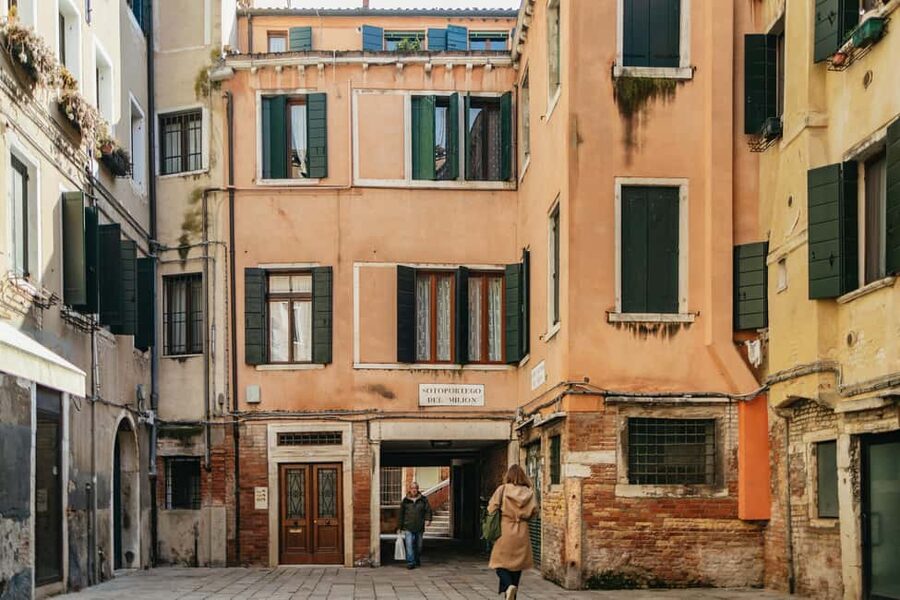
- Rialto Bridge meet-up near San Giacometto makes it easy to start where Venice feels real
- Audio headsets help you hear the guide even in narrow, noisy lanes
- St. Mark’s Basilica stories explain why the design mixes East and West, plus how the relics landed in Venice
- Libreria Acqua Alta gives you a breezy break that still feels unmistakably Venetian
- Gondola rides limited to about 5 people keep the experience calmer than the usual scrum
Start at Rialto: Easy Meeting, Fast Orientation on Foot

You meet outside the Church of San Giacometto at Campo San Giacomo di Rialto. The guide holds a green Walks sign. From there, you begin with the kind of orientation Venice sorely needs—how neighborhoods connect, where the foot-traffic flows, and why certain corners keep showing up in the city’s big stories.
This is a walking tour, so plan for steady time on your feet. Comfortable shoes matter more than people think, because you’re crossing stone bridges and threading through lanes that look similar until your guide points out what’s different.
What I like most early on is the way the walk turns landmarks into context. You’re not just seeing a place. You’re learning what role it played in daily life—commerce, food, religion, and power.
Rialto Bridge, Fish Market, and Food Clues You Can Use
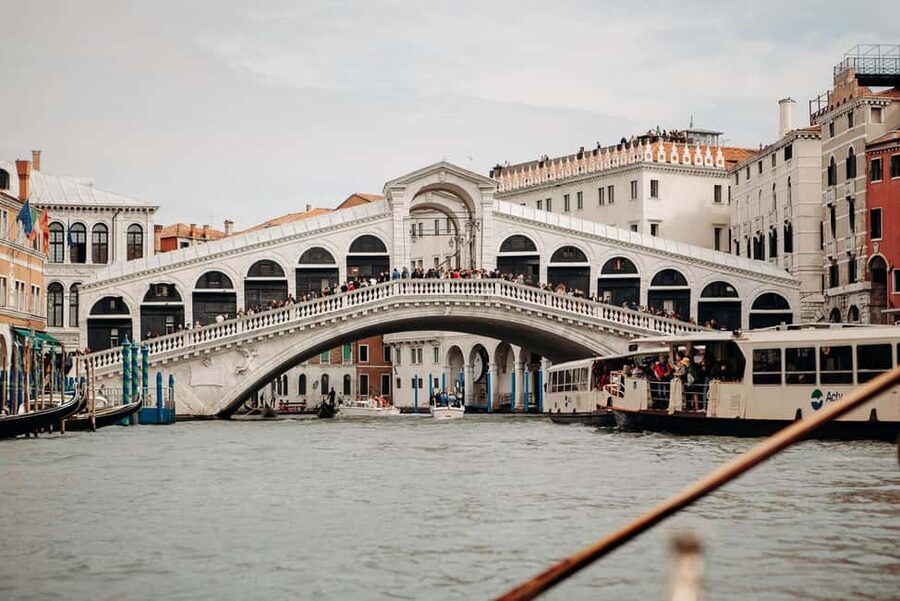
Right away, you get into the Rialto Bridge story—how it originally faced strong pushback as a building idea. That kind of detail changes how you view the bridge. Instead of just seeing a photo spot, you start noticing the logic behind it: Venice engineered solutions for water-heavy living and dense crowds.
Then you move by (and learn about) the Rialto Fish Market. Even if you don’t plan to shop, this is a Venice shortcut into food culture. The guide connects fishing history to what people ate, and you’ll pick up a few restaurant recommendations along the way. That matters because Venice restaurants can be either inspired or overpriced. A local guide’s suggestions are the fastest way to aim for the good stuff.
One practical thing: the Fish Market is closed on Sundays. If your day lines up that way, don’t panic—your guide will still keep the market-and-food themes moving through the walk.
Castello Streets, Palazzo Grimani Sight Glimpse, and Verrocchio’s Statue
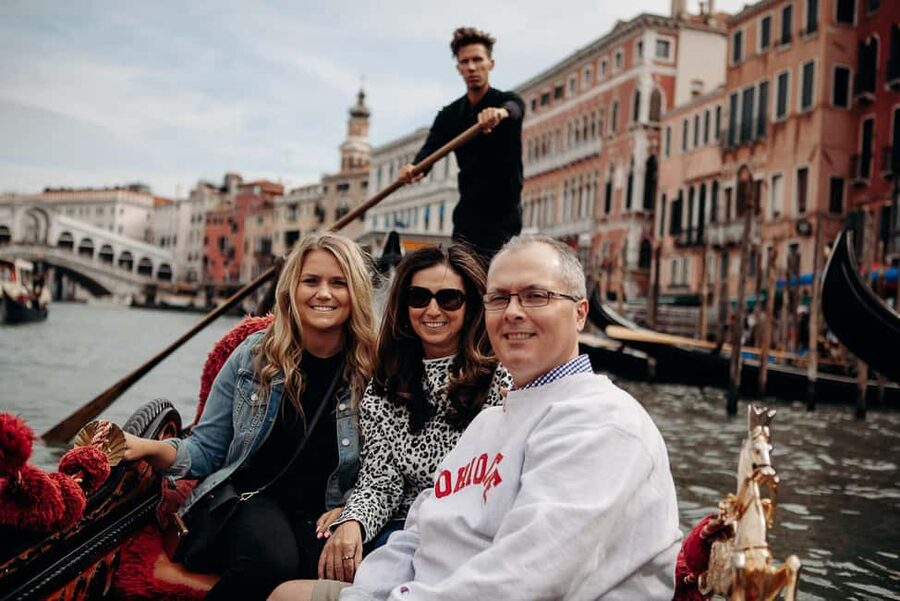
As the walk shifts toward Castello, Venice starts to feel less like a postcard and more like a place where people actually live. You’ll pass through quieter streets and alleyways, the kind of spots that make you understand why Venice never feels fully “finished.” It’s lived in.
Along this stretch, you’ll see typical Venetian architectural styles and stop to admire a statue by Verrocchio in Campo San Giovanni e Paolo. That’s a smart inclusion. Most tours rush from one famous sight to another. Here, you get a piece of art history anchored in an actual public square—where the city’s everyday rhythm keeps going.
You also pass by Museo di Palazzo Grimani. Even without a museum-style visit here, seeing the grandeur from street level helps you grasp what wealth looked like in Venice: not just big buildings, but power made visible through architecture.
Libreria Acqua Alta: A Fun Break That Still Fits the Venice Story
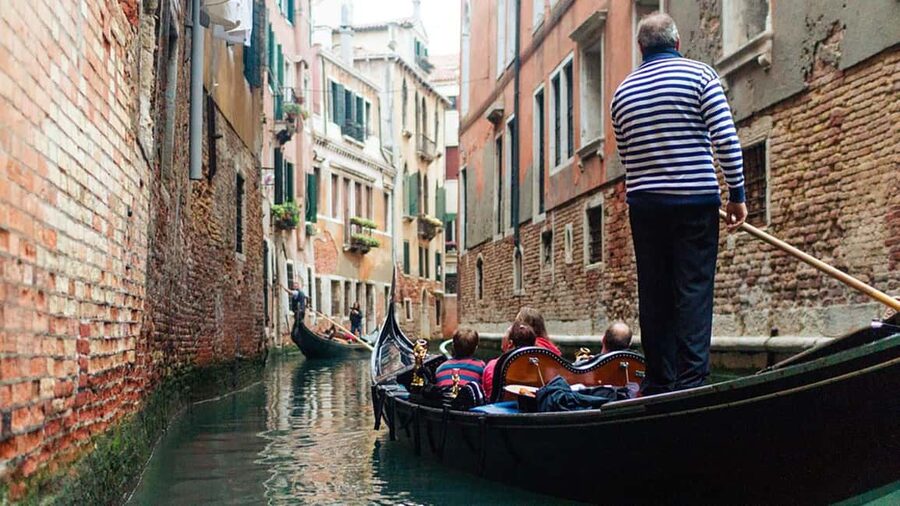
About ten minutes is allocated for Libreria Acqua Alta—short, but well-chosen. This is the kind of stop that balances the heavy stuff (churches, relics, politics) with something playful and distinctly Venetian.
The bookstore sits in a canal-facing setting, with a quirky vibe and friendly resident cats. You can browse on your own while your guide waits outside. That “free time pocket” is useful, because it gives you a breather before the Basilica—without losing the momentum of the tour.
If you’re thinking about photos, this is one of the easier moments to get them. The place has character and structure, even in the tight canal setting.
St. Mark’s Basilica: Gold Mosaics, Relics, and Skip-the-Line Entry
St. Mark’s Basilica is the star of the show, and the tour handles it in the way that matters: pre-reserved entry that helps you bypass the long lines. Without that, you can burn a huge chunk of your day just waiting in the queue. With it, you walk in and start absorbing the place.
Once inside, your guide brings the Basilica to life. You’ll hear why the architecture blends eastern and western design. You’ll also get the dramatic story of how St. Mark’s relics arrived in Venice—an origin tale that explains why this church became so central to Venetian identity.
Then you focus on the mosaics. The gold ceiling isn’t just decorative. It’s a message—visual power designed to overwhelm you in the best way. If you’ve ever walked into a church and felt nothing, this one is different. Your guide helps you look at the details instead of just staring upward.
Two very practical notes:
- You need a photo ID for entry. Security can refuse you if you forget it.
- If conditions on your date affect entry, the tour experience can change. That’s rare, but it’s worth knowing so you’re not shocked if your day shifts.
Gondola Ride from Bacino Orseolo: Calm Canals, Small Boats
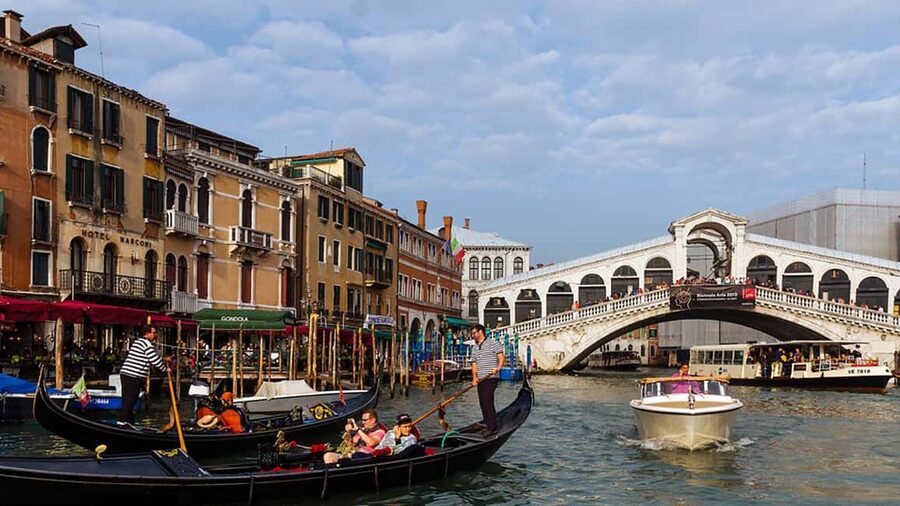
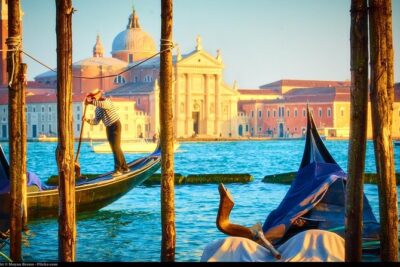
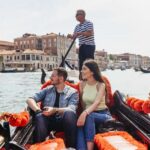
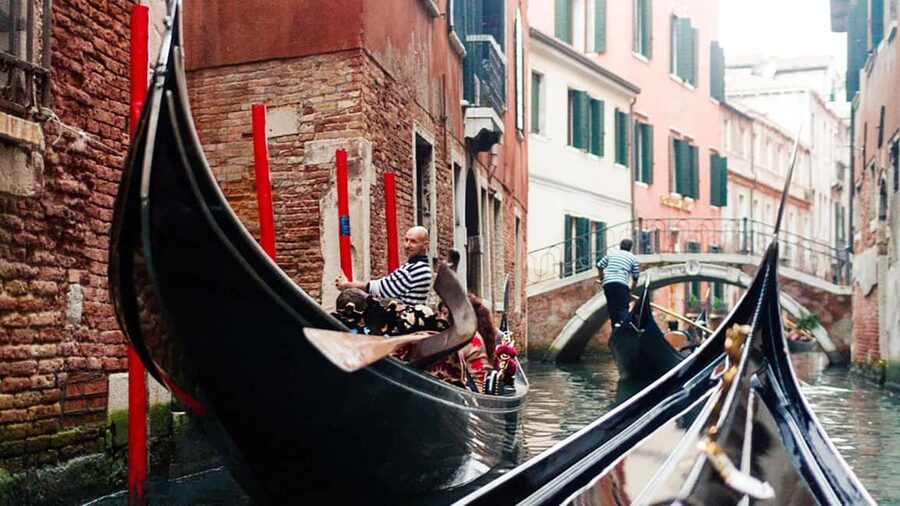
After St. Mark’s, you head to Bacino Orseolo for the gondola ride. Expect about a 30-minute ride, with a professional gondolier. The tour is designed for intimacy: gondolas are limited to around five people.
That small size is where the value shows up. A gondola can become a group shuffle if you’re packed in and everyone’s talking over each other. Here, you get more of the slow, floating feeling—less performance, more sightseeing.
Also, you should know the guide does not stay with you on the gondola. You’ll enjoy the ride on your own with the gondolier. That makes the experience feel more like a real Venice moment rather than another lecture.
And yes, the canals you’ll row through are aimed at the city center, with time in quieter channels rather than constant traffic only on the most famous routes. It’s a good contrast to the walking portion: you’ve been moving with purpose on foot; now you slow down and watch.
Weather can matter. During high tides, flooding, or heavy rain, the gondola ride may be substituted for another experience. If you’re traveling in shoulder season or during stormy weeks, keep that flexibility in mind.
Price and Value: Why $79 Can Make Sense in One Day
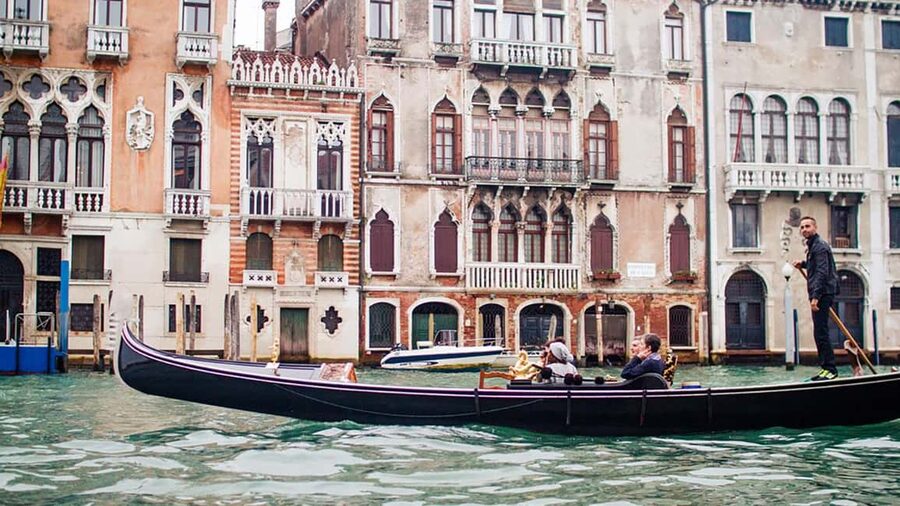
At around $79 per person for a 3-hour format, this is not a budget bargain. But it’s also not just paying for a few pretty photos.
You’re getting three things folded into one ticket:
- A local English-speaking walking guide with audio headsets
- Skip-the-line access to St. Mark’s Basilica
- A ~30-minute gondola ride
The math is simple. In Venice, you often pay separately for museum/church entry and guided explanation. Add a gondola, and the price starts looking reasonable, especially if you only have one day and want the biggest “Venice hits” with less hassle.
It also helps that many guides are praised for telling stories with passion and answering questions clearly. I’ve seen this pattern with several names you might be assigned, including Roberta, Filippo, Francesca, Nico, Martina, Elena, Helena, Pamela, Mattia, and others. The difference between a good guide and an average one is huge in Venice, where the streets look similar unless someone gives you a way to read them.
Service and the Human Factor: When It’s Perfect and When It Falls Flat
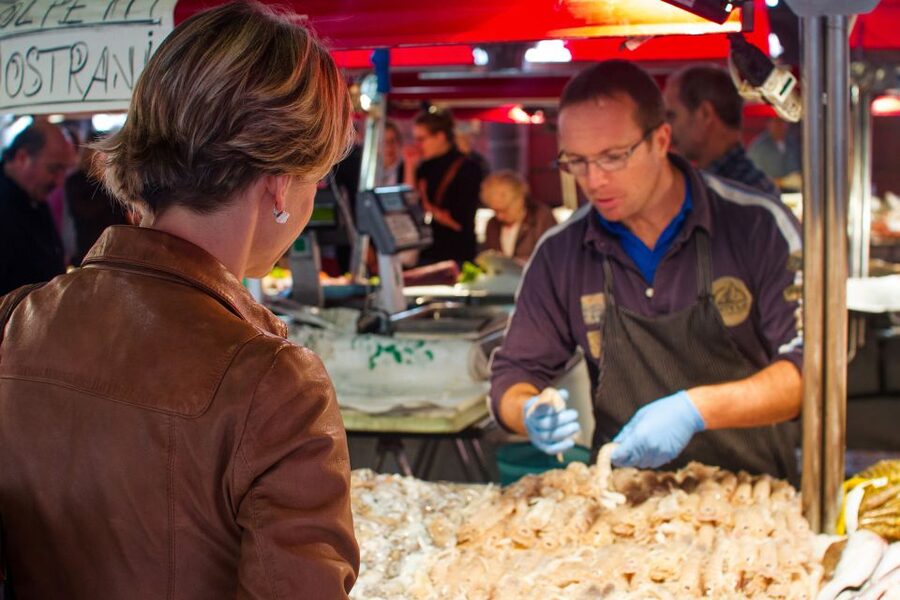
Most of the experience is strong. The format is right: walk first (you learn the city), then go inside St. Mark’s (you get meaning), then glide by water (you get the reward).
But Venice tours are still run by people. There are a few possible rough edges to keep in mind:
- Some guides can manage group questions differently than you’d like. If you’re expecting a super relaxed, chatty style all the way through, you might prefer a different guide or a tour with more flexibility built in.
- Gondoliers can be friendly, quiet, or… not great at communicating. One downside that shows up sometimes is a less welcoming attitude from the gondolier. It’s not the kind of thing you control, but it can color the mood.
- Timing matters. Some departures include pockets of waiting, and if your schedule is tight, that can feel like dead time.
None of these issues are guaranteed. Just treat this as a “big sights + main transport” package, not a fully personalized day.
Who This Tour Suits Best (and Who Should Skip It)
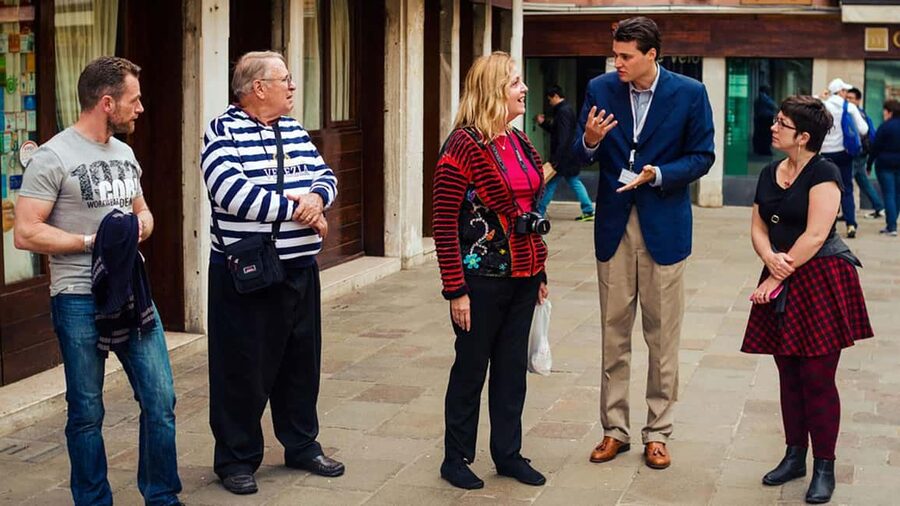
This tour is a great match if:
- You have limited time in Venice and want St. Mark’s plus a gondola
- You like your landmarks explained, not just photographed
- You’re okay walking at a moderate pace on stone streets and stairs
It’s not a good match if:
- You use a wheelchair or have mobility impairments, since the tour isn’t suitable for that
- You need a stroller. Baby strollers aren’t allowed
- You’re carrying large bags, luggage, or trolleys. The tour can’t accommodate them
- You forget photo ID. You need it for St. Mark’s Basilica entry
Also, book with a realistic expectation of crowds. Even with skip-the-line entry, Venice is still Venice.
Final Call: Should You Book St. Mark’s Basilica + Gondola?
If this is your first time in Venice, I’d lean yes. The combo works because it hits the top priorities in a smart order: you learn the city while walking, you understand St. Mark’s while you’re inside it (not after), and then you relax on the water.
But if you’re picky about communication styles, and you absolutely hate last-minute changes, go in with eyes open. Bring your photo ID. Wear comfortable shoes. And accept that the gondola part is shared and governed by whoever you get that day.
If you want a single, efficient Venice “greatest hits” day, this is one of the better ways to do it—especially with the skip-the-line Basilica entry and the small-gondola setup.
FAQ
How long is the tour?
It runs for about 3 hours total, with a walking portion plus skip-the-line entry to St. Mark’s Basilica and an approximately 30-minute gondola ride.
Where do we meet?
Meet outside the entrance of the Church of San Giacometto at Campo San Giacomo di Rialto. The guide will be holding a green Walks sign.
Does the tour include St. Mark’s Basilica entry without waiting?
Yes. You get pre-reserved skip-the-line access to enter St. Mark’s Basilica.
Do we ride the gondola with the tour guide?
No. The guide leaves you to enjoy the gondola ride, and you ride with a professional gondolier.
Is a photo ID required?
Yes. A photo ID is required to visit St. Mark’s Basilica, and security staff can refuse entry if you do not bring it.
What if there are high tides or heavy rain?
During times of high tides, flooding, or heavy rain, the gondola ride may be substituted for another experience.